Python Programming from Scratch
Python is easy to read and widely used for data analysis, automation, web development and teaching programming. This article walks you through your first program, variables, lists, dictionaries, functions and reading files.
Testing note: the computer used to write this article does not have Python installed, so the code has not been run here yet. Run each example yourself and check the output. The article will show real output once it has been tested.
What you need
- Python 3.11 or newer (check with `python --version`, or `py --version` on Windows)
- A text editor such as VS Code
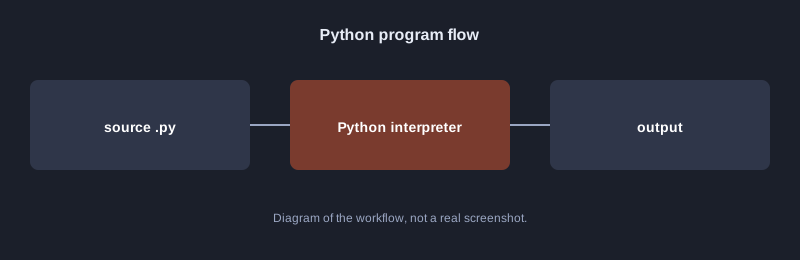
How it works
Your first program
Create `hello.py` and type:
print("สวัสดี Python")
Run it with `python hello.py`. You should see `สวัสดี Python`.
Variables and lists
name = "สมชาย"
scores = [85, 72, 45]
average = sum(scores) / len(scores)
print(name, "คะแนนเฉลี่ย", round(average, 2))
Python does not require declaring types. A list stores a changeable sequence of items, and `len` returns the number of items.
Dictionaries and conditions
students = {"สมชาย": 85, "สมหญิง": 72, "สมศักดิ์": 45}

def grade(score):
    if score >= 80:
        return "A"
    elif score >= 70:
        return "B"
    elif score >= 50:
        return "C"
    return "F"

for name, score in students.items():
    print(name, grade(score))
A dictionary stores key-value pairs. Functions are defined with `def`, and indentation marks the code block.
Reading and writing files
with open("scores.txt", "w", encoding="utf-8") as f:
    f.write("สมชาย,85\nสมหญิง,72\n")

with open("scores.txt", encoding="utf-8") as f:
    for line in f:
        name, score = line.strip().split(",")
        print(name, int(score))
`with` closes the file automatically, and `encoding="utf-8"` keeps Thai text correct.
Common mistakes
- **Inconsistent indentation:** Python uses indentation for structure. Use 4 spaces.
- **Missing colon:** `if`, `for` and `def` lines need a `:`.
- **Garbled Thai in files:** pass `encoding="utf-8"` whenever you open a file.
Next steps
Write a program that reads grades from `scores.txt` and writes the results to a new file, then learn standard modules such as `csv` and `datetime`.
Summary
Python uses readable structure. Lists and dictionaries store data, functions organise repeated work, and `with open` reads and writes files safely.